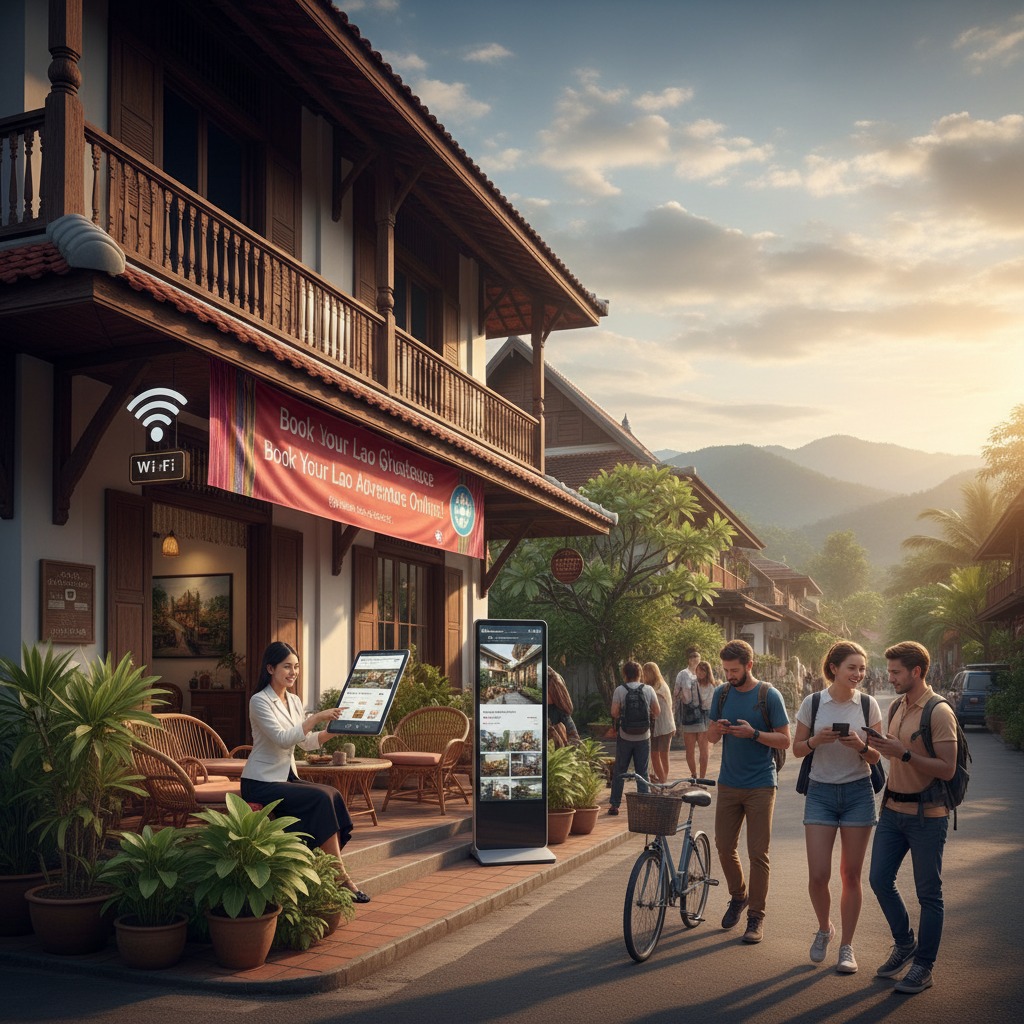
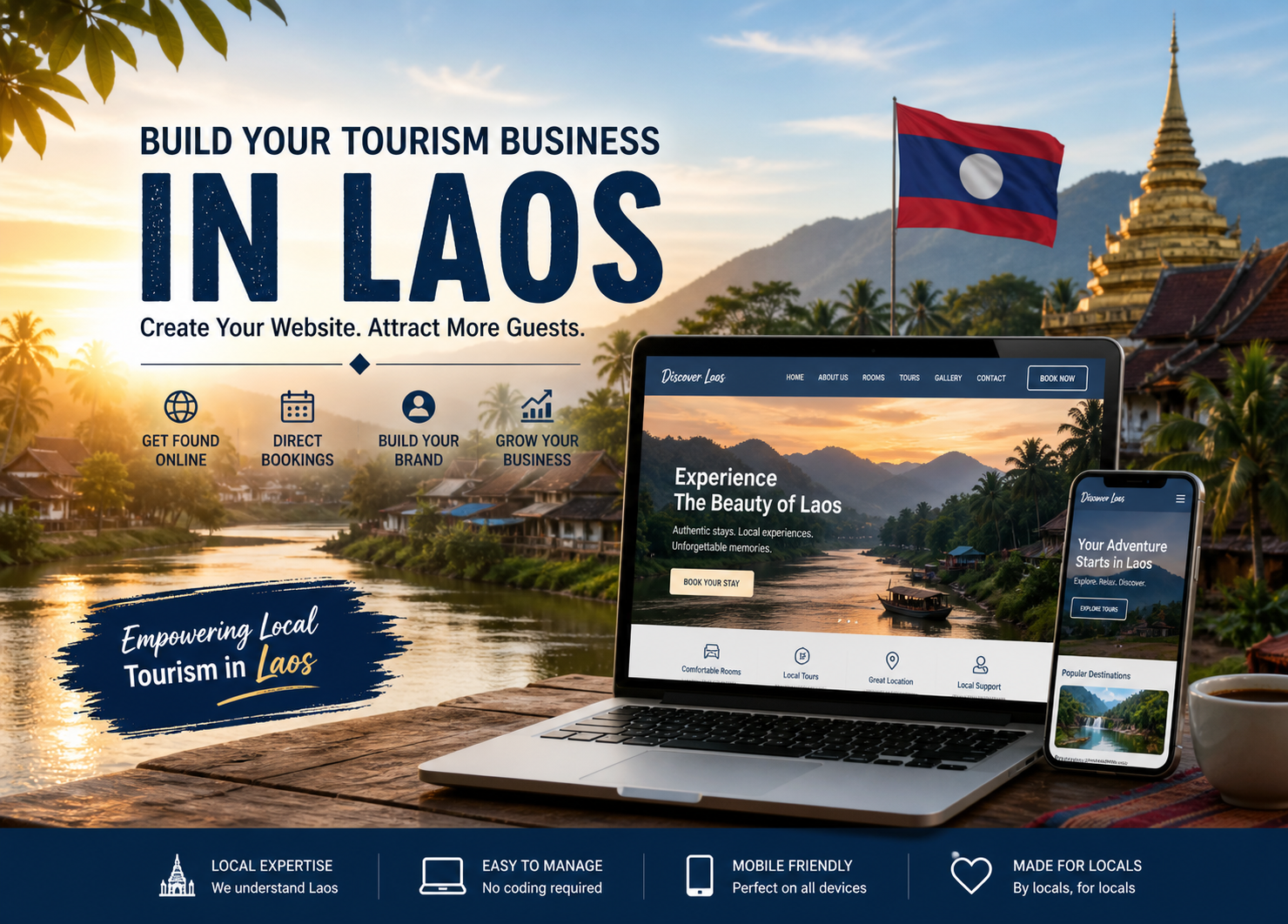
The tourism industry in Laos has grown steadily over the past decade, attracting travelers looking for authenticity, nature, slow travel, and cultural experiences. From the temples of Luang Prabang to the islands of Si Phan Don, hotels and guesthouses have multiplied rapidly. Yet despite the beauty of the destinations themselves, many hotel websites in Laos continue to struggle to convert visitors into actual bookings.
Why Most Hotel Websites in Laos Fail
One of the biggest problems is outdated design. A large number of hotel websites still look as if they were created fifteen years ago. Slow loading times, broken links, low-resolution images, and confusing navigation immediately damage trust. Modern travelers compare dozens of accommodations before booking, and a poorly designed website often makes a hotel appear unprofessional, even if the property itself is excellent.
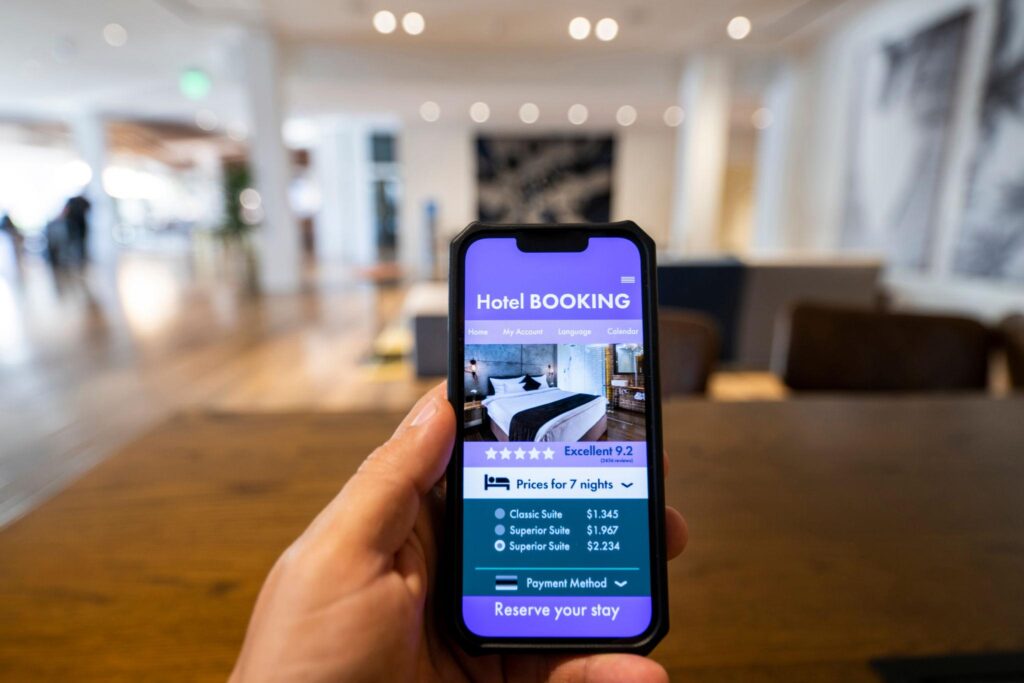
Another major issue is the lack of mobile optimization. Today, most travelers search and book hotels directly from smartphones. Unfortunately, many Lao hotel websites are difficult to use on mobile devices. Text is too small, booking buttons are hidden, and pages do not adapt properly to smaller screens. In a country where tourism increasingly depends on international digital visibility, this is a serious disadvantage.
Why Most Hotel Websites in Laos Fail
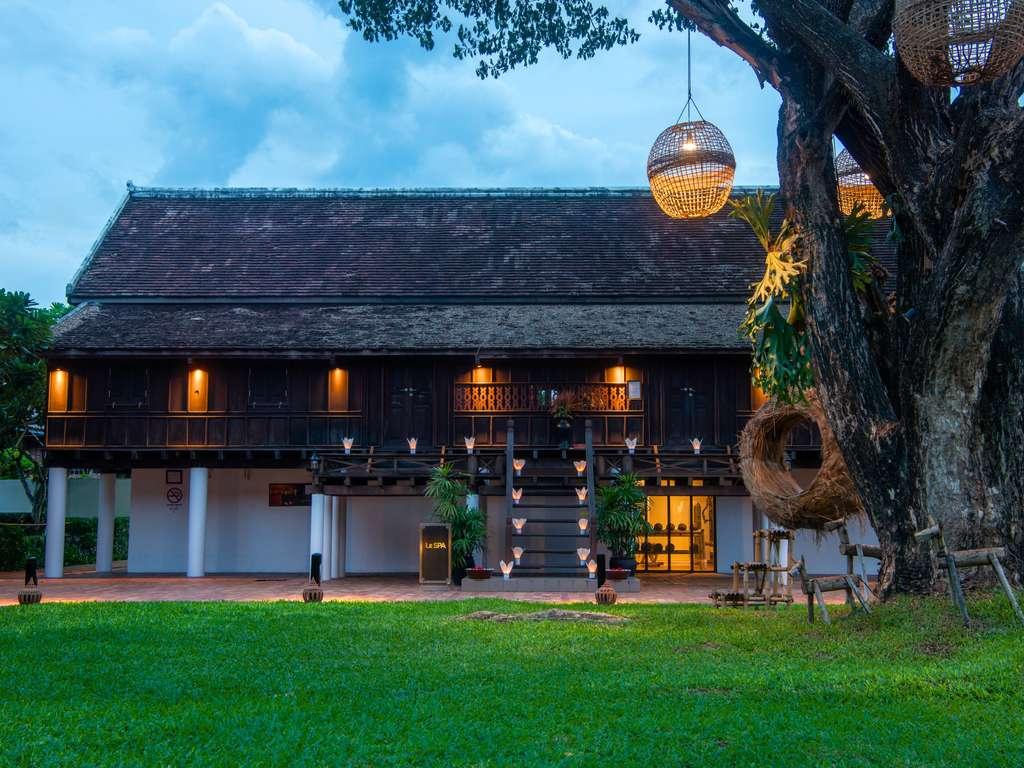
Photography is also frequently neglected. Many hotels in Laos are located in extraordinary environments: riverside bungalows, colonial buildings, tropical gardens, or mountain landscapes. Yet their websites often feature dark, blurry, or badly framed photos. High-quality visual storytelling is essential in hospitality marketing. Travelers want to imagine themselves relaxing in the room, enjoying breakfast with a view, or discovering the surrounding culture.
Language and content quality create another barrier. Some websites contain incomplete English translations, spelling mistakes, or outdated information about prices and services. Others fail to explain what makes the hotel unique. In a competitive tourism market, generic descriptions such as “nice room” or “good service” are no longer enough. Hotels need compelling storytelling that highlights local identity, atmosphere, sustainability, and guest experience.
Booking systems are another weak point. Many independent hotels still rely only on messaging apps or email inquiries instead of offering instant online reservations. International tourists expect secure payment options, real-time availability, and immediate confirmation. When a booking process becomes complicated, travelers simply move to another website or use large platforms like Booking.com instead.
Search engine visibility is also extremely poor for many establishments. Without proper SEO, optimized content, or updated Google Business profiles, hotel websites remain invisible on search engines. Even beautiful boutique hotels often lose customers because potential guests cannot easily find them online.
However, the situation is improving. A growing number of boutique hotels, eco-lodges, and hospitality entrepreneurs in Laos are investing in modern branding, professional photography, multilingual content, and responsive design. The hotels that succeed online are usually those that understand one essential idea: a hotel website is no longer just an online brochure. It is the hotel’s digital reception desk, sales agent, and first impression all at once.
For hotels, guesthouses, boutique properties, resorts, apartments, and vacation rentals, online visibility has become the foundation of business success. Travelers rarely walk into a hotel without researching it online first. Most reservations now begin with a search engine, a travel platform, social media, or a direct recommendation supported by digital content.
Among all online travel agencies (OTAs), Booking.com remains one of the most influential platforms in the hospitality industry. Millions of travelers use it every day to compare prices, discover accommodations, read reviews, and make instant reservations. For many hotel owners, Booking.com is often the first major source of bookings.
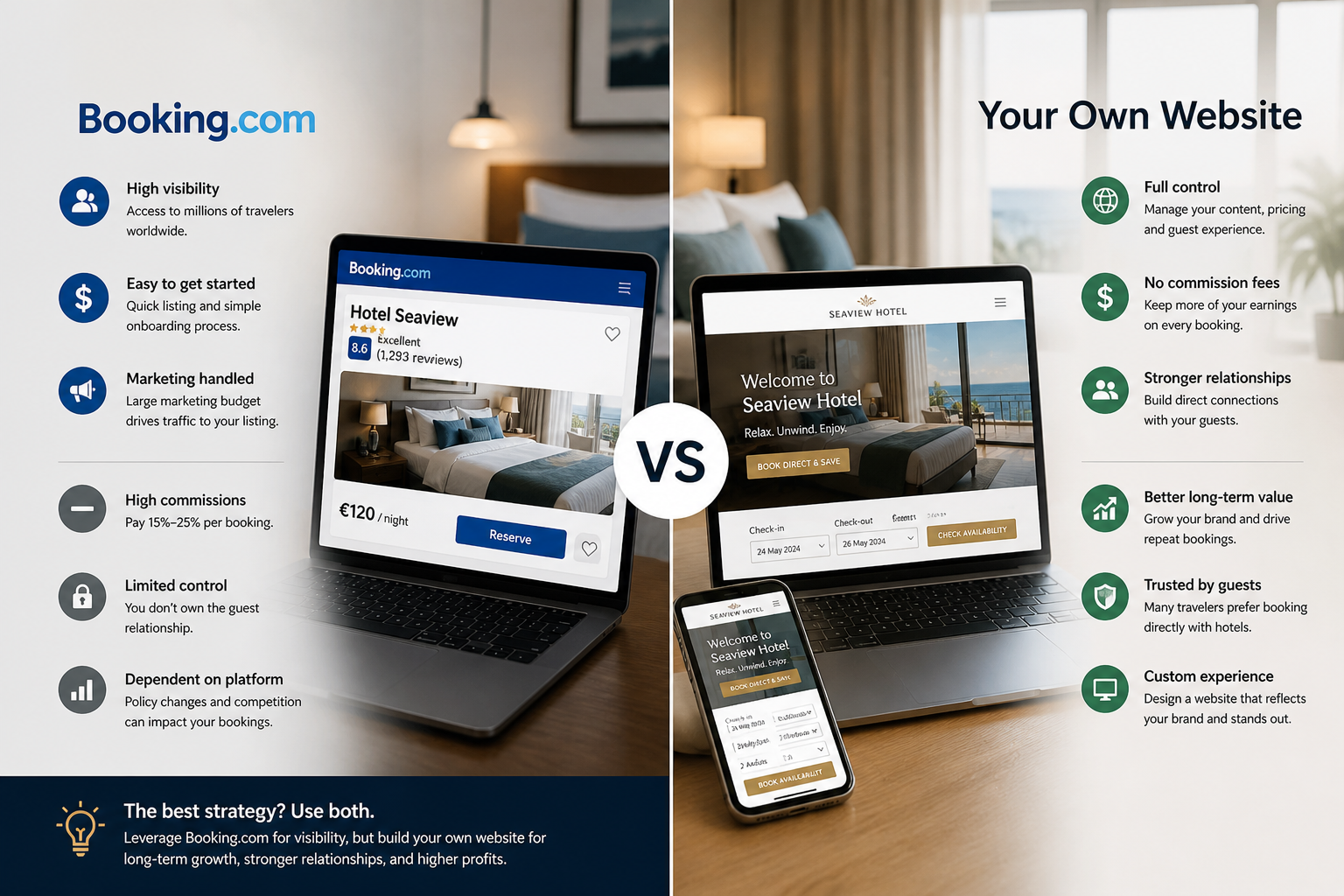
At the same time, relying entirely on Booking.com can create long-term challenges. Commission fees reduce margins, customer relationships remain controlled by the platform, and direct brand loyalty becomes harder to build.
This creates an important question for accommodation owners:
Should you focus on Booking.com or invest in your own website?
The answer is not simply one or the other. Understanding the strengths and limitations of both channels is essential for building a profitable, sustainable hospitality business.
This article explores the advantages, disadvantages, financial implications, marketing strategies, branding opportunities, and long-term business impact of Booking.com versus your own direct booking website.
Booking.com vs Your Own Website: Which One Should Drive Your Hotel Business?
Understanding Booking.com
Booking.com is one of the world’s largest online travel agencies. Founded in the Netherlands in 1996, the platform now operates globally and lists millions of accommodations.
For hotel owners, Booking.com offers instant exposure to a massive audience. Travelers trust the platform, making it easier for smaller or lesser-known properties to receive reservations.
Booking.com provides:
International visibility
Secure payment systems
Multi-language support
Guest review management
Reservation systems
Mobile booking optimization
Marketing campaigns and promotions
Customer service infrastructure
For many small hotels, Booking.com acts as a ready-made sales engine.
The Main Advantages of Booking.com
1. Immediate Visibility
One of the biggest challenges for independent hotels is attracting traffic online. Creating a website alone does not guarantee visitors.
Booking.com already has enormous global traffic. Travelers searching for accommodations in almost any destination will likely use the platform.
This means even a new property can quickly gain visibility without investing heavily in advertising.
For example:
A new boutique hotel in Laos
A guesthouse in Colombia
A small resort in Thailand
A family-run hotel in Portugal
can all receive international bookings almost immediately after joining the platform.
2. Trust and Credibility
Travelers often trust Booking.com because of:
Verified reviews
Secure payments
Clear cancellation policies
Strong customer support
Familiar booking experience
A small independent hotel website may appear less trustworthy to first-time visitors.
Booking.com reduces traveler hesitation.
3. Easy Setup
Launching a property on Booking.com is relatively simple.
The platform provides tools for:
Managing room inventory
Uploading photos
Adjusting rates
Synchronizing calendars
Handling promotions
Tracking analytics
Many small hotels start receiving bookings within days.
4. Mobile Reach
A significant percentage of travelers now book through smartphones.
Booking.com has heavily optimized its mobile experience, allowing hotels to benefit from:
Fast mobile reservations
International app users
Mobile-only promotions
Last-minute booking visibility
Building a high-performance mobile website independently requires additional investment.
5. International Marketing Power
Booking.com spends billions on global advertising campaigns, search engine optimization, and digital marketing.
Hotels listed on the platform indirectly benefit from this enormous marketing ecosystem.
Without Booking.com, independent properties would need substantial marketing budgets to reach similar audiences.
The Main Disadvantages of Booking.com
1. Commission Fees
The biggest criticism of Booking.com is commission.
Depending on location and agreement, hotels often pay between 10% and 25% per reservation.
Over time, this becomes extremely expensive.
For example:
A room sold for $100
20% commission
Hotel receives only $80
Now multiply this by hundreds or thousands of reservations annually.
The impact on profitability becomes significant.
2. Limited Customer Ownership
When guests book through Booking.com, the platform controls much of the customer relationship.
Hotels may have limited access to:
Direct customer communication
Marketing permissions
Guest data
Retargeting opportunities
This makes it harder to build long-term loyalty.
Guests often remember Booking.com more than the hotel itself.
3. Strong Competition
On Booking.com, your property appears next to competitors.
Travelers compare:
Prices
Ratings
Amenities
Photos
Locations
Cancellation policies
This creates constant pricing pressure.
Hotels may reduce prices simply to remain competitive in search rankings.
4. Dependence on the Platform
Some hotels become overly dependent on Booking.com.
If the platform changes:
Algorithms
Policies
Commission structures
Visibility rankings
the hotel’s revenue may suffer immediately.
Heavy dependency creates business vulnerability.
5. Brand Identity Challenges
Booking.com standardizes much of the booking experience.
While hotels can upload photos and descriptions, the overall customer journey remains inside the Booking.com ecosystem.
This limits the ability to create:
Unique storytelling
Emotional branding
Distinctive customer experiences
Personalized marketing journeys
The Power of Your Own Website
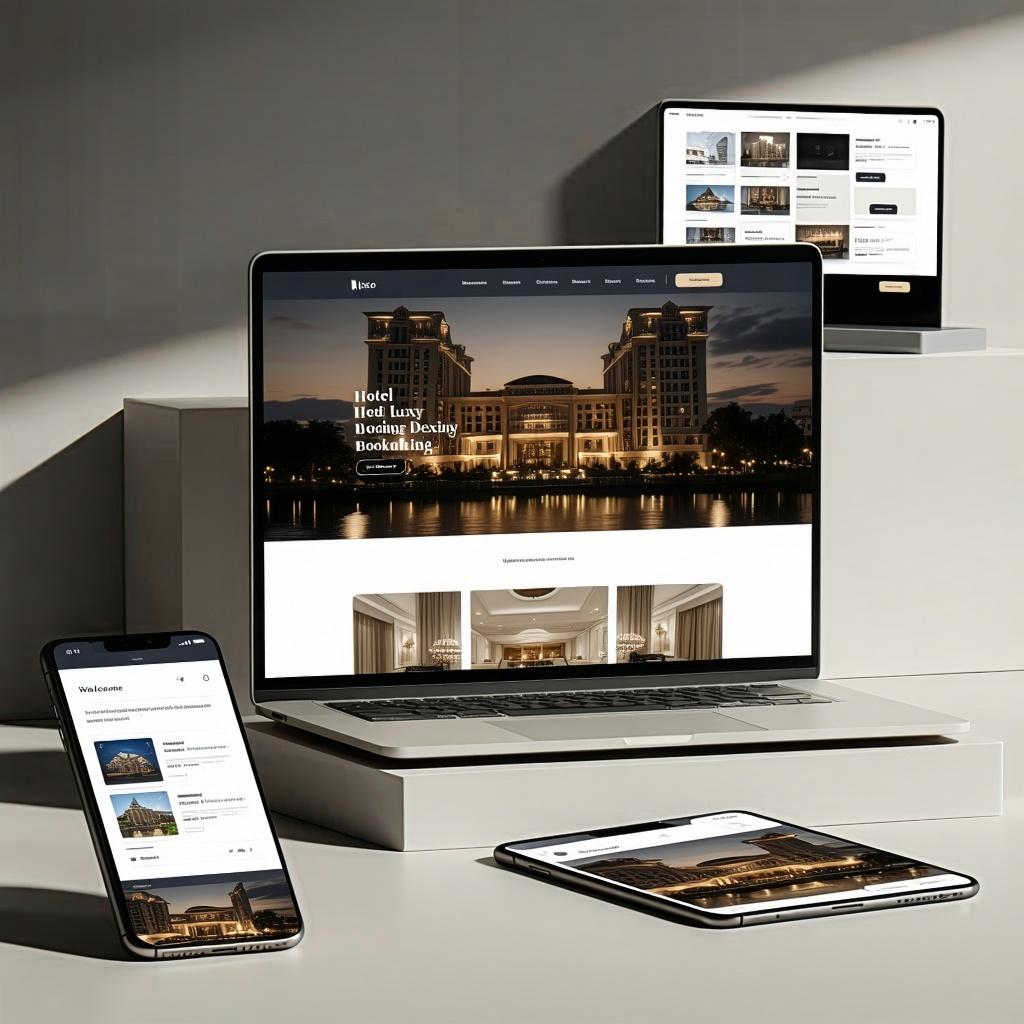
A direct booking website gives hotels complete control over branding, customer relationships, and revenue.
Instead of depending entirely on OTAs, hotels can build their own long-term digital assets.
A website acts as:
A booking platform
A marketing channel
A branding tool
A customer relationship hub
A content platform
A direct communication system
Advantages of Your Own Hotel Website
1. Higher Profit Margins
Direct bookings avoid OTA commissions.
Even after accounting for:
Website hosting
Payment processing fees
Marketing costs
SEO investment
many hotels still retain more profit per reservation.
For example:
Booking.com reservation: 20% commission
Direct website booking: 3% payment processing fee
The financial difference becomes substantial over time.
2. Full Brand Control
Your website represents your hotel exactly as you want.
You control:
Design
Colors
Photography
Tone of voice
Storytelling
Guest experience
Promotions
Content strategy
This allows stronger emotional branding.
A luxury boutique hotel can create an entirely different atmosphere than a budget hostel.
3. Better Customer Relationships
Direct bookings create stronger guest connections.
Your own website allows deeper storytelling than OTA listings.
The Future of Hotel Distribution
The hospitality industry continues evolving rapidly.
Several trends are shaping the future:
AI-Powered Travel Planning
Artificial intelligence increasingly influences how travelers discover hotels.
Hotels with strong digital content and direct branding may gain long-term advantages.
Increased Direct Booking Strategies
Many hotels now prioritize direct reservations to reduce commission costs.
This trend continues growing.
Experience-Based Marketing
Travelers want:
Authenticity
Local culture
Personalized stays
Memorable experiences
Websites help communicate these experiences more effectively.
Multi-Channel Distribution
Successful hotels rarely depend on a single source.
Future success will likely come from balanced distribution across:
OTAs
Direct websites
Social media
Google Hotel Ads
Metasearch platforms
Email marketing
Which Strategy Is Best?
The ideal strategy depends on your business stage.
New Hotels
New properties often benefit significantly from Booking.com because:
Visibility is immediate
Trust already exists
Marketing barriers are lower
Established Hotels
Hotels with strong reputations should invest heavily in direct bookings.
This improves:
Profit margins
Customer retention
Brand value
Long-term independence
Boutique and Luxury Hotels
Brand storytelling becomes extremely important.
A strong direct website can become a powerful competitive advantage.
Budget Hotels
OTAs may remain highly important due to price-based customer behavior.
However, direct loyalty programs still help increase repeat business.
Final Thoughts
Booking.com is an extremely powerful platform that can generate significant business for hotels worldwide. For many properties, especially new or smaller accommodations, it provides essential visibility and consistent reservations.
However, relying entirely on OTAs creates long-term risks:
High commission costs
Reduced brand control
Limited customer ownership
Increased dependency
Your own website represents long-term digital independence.
It allows hotels to:
Increase profits
Build stronger brands
Create customer loyalty
Develop direct relationships
Control marketing strategies
The smartest approach is rarely choosing one over the other.
Instead, successful hotels use Booking.com as a discovery engine while gradually strengthening their direct booking ecosystem.
Over time, the goal should be balance:
OTAs for visibility
Your website for profitability and loyalty
In the modern hospitality industry, hotels that combine both effectively will likely achieve the strongest long-term results.
If you run a guesthouse in Luang Prabang, Vang Vieng, or anywhere in Laos, you already know how important it is to attract foreign travelers. But in 2026, most tourists search and book online — and if your guesthouse isn’t on the web, you’re invisible to them.
The good news: creating a professional website for your guesthouse in Laos is now easier and more affordable than ever. This guide walks you through everything, step by step, with no technical experience required.
Why Your Guesthouse Needs Its Own Website in 2026
Booking platforms like Booking.com and Airbnb are useful — but they take up to 18% commission on every booking. That’s money coming directly out of your profit.
Your own website changes everything:
Direct bookings = zero commission
Travelers trust a real website more than just a listing
You control your prices, availability, and brand story
Google can find you — platforms control what they show
According to the Lao National Tourism Administration, Laos welcomed over 4.5 million international tourists in 2023. Most of these travelers research accommodations on Google before they ever open a booking app. If you don’t have a website, you’re missing the first step of that journey.
What Your Guesthouse Website Must Have
A good guesthouse website doesn’t need to be complicated. It needs to be clear, fast, and trustworthy. Here’s the essential checklist:
1. Home Page
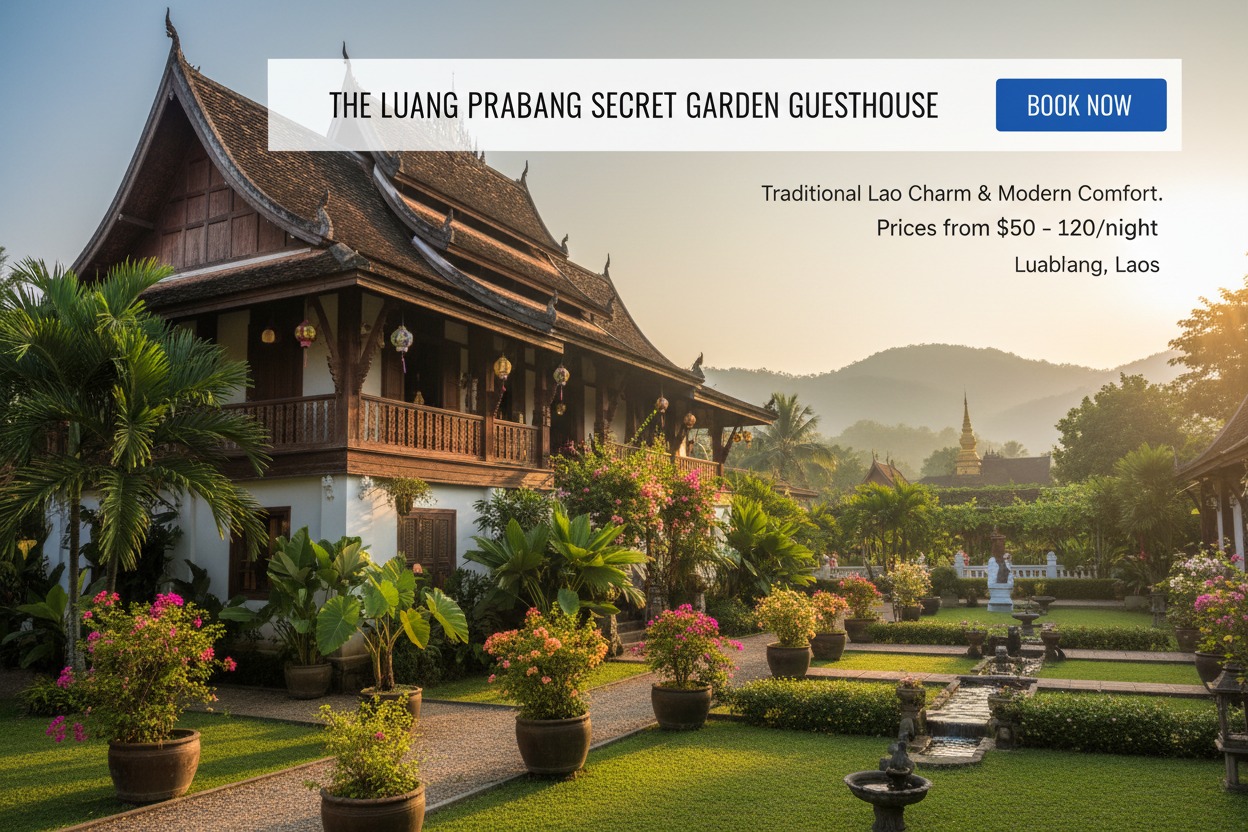
Beautiful photos of your rooms and surroundings, your location (Luang Prabang, Laos — be specific), a clear “Book Now” button, and your price range.
2. Rooms & Rates Page
Show each room with photos, a description, and the price per night. Be transparent — travelers appreciate honesty. Include what’s included: Wi-Fi, breakfast, air conditioning, hot water.
3. Location & How to Get Here
A clear map, written directions, and a WhatsApp number are more useful than a complex address. Mention nearby landmarks (“5 minutes from Wat Xieng Thong”).
4. Photo Gallery
This is your most powerful selling tool. Show your rooms, common areas, breakfast, the view, the street outside. Travelers buy with their eyes.
5. Contact & Booking Form
Name, dates, number of guests, message. Add your WhatsApp number prominently — many Asian travelers prefer WhatsApp over email.
6. Reviews Section
Copy your best Google or TripAdvisor reviews onto your site. Social proof is everything in hospitality.
Mobile First — Your Guests Are on Their Phones
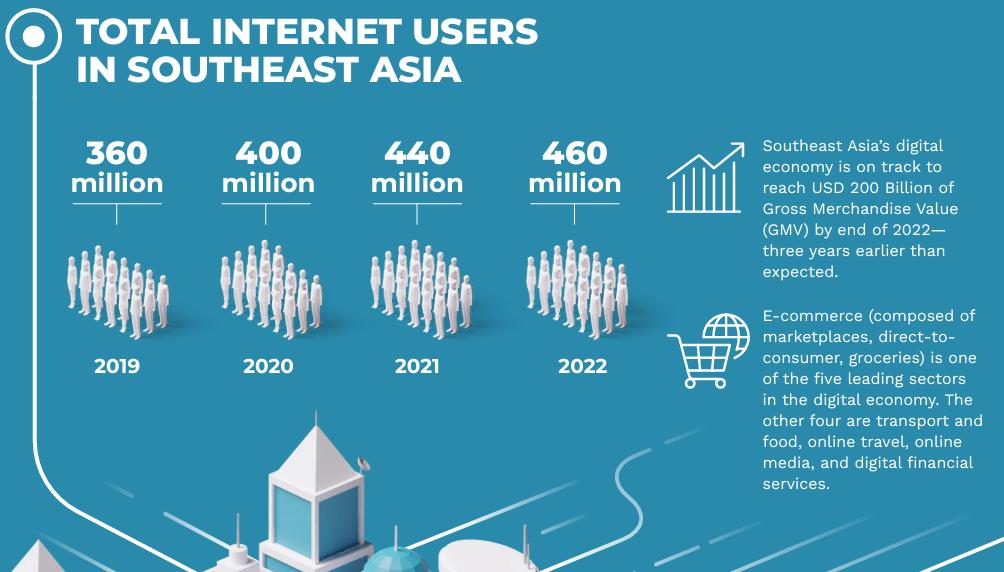
Over 78% of travel searches in Southeast Asia happen on smartphones. Your guesthouse website must look perfect on a small screen — before anything else. Big, tappable buttons, text large enough to read without zooming, photos that load fast on 4G, and a WhatsApp button that opens directly on mobile.
How Much Does a Guesthouse Website Cost in Laos?
Option
Cost
Pros
Cons
DIY (Wix, Squarespace)
$15–25/month
Cheap to start
Generic, slow, hard to rank on Google
WordPress template
$200–500 one-time
More control
Requires maintenance
Custom built (React)
$500–1500
Fast, SEO-optimized, unique
Higher upfront cost
For a guesthouse doing serious business, a custom-built website pays for itself in 3–5 direct bookings by eliminating platform commissions.
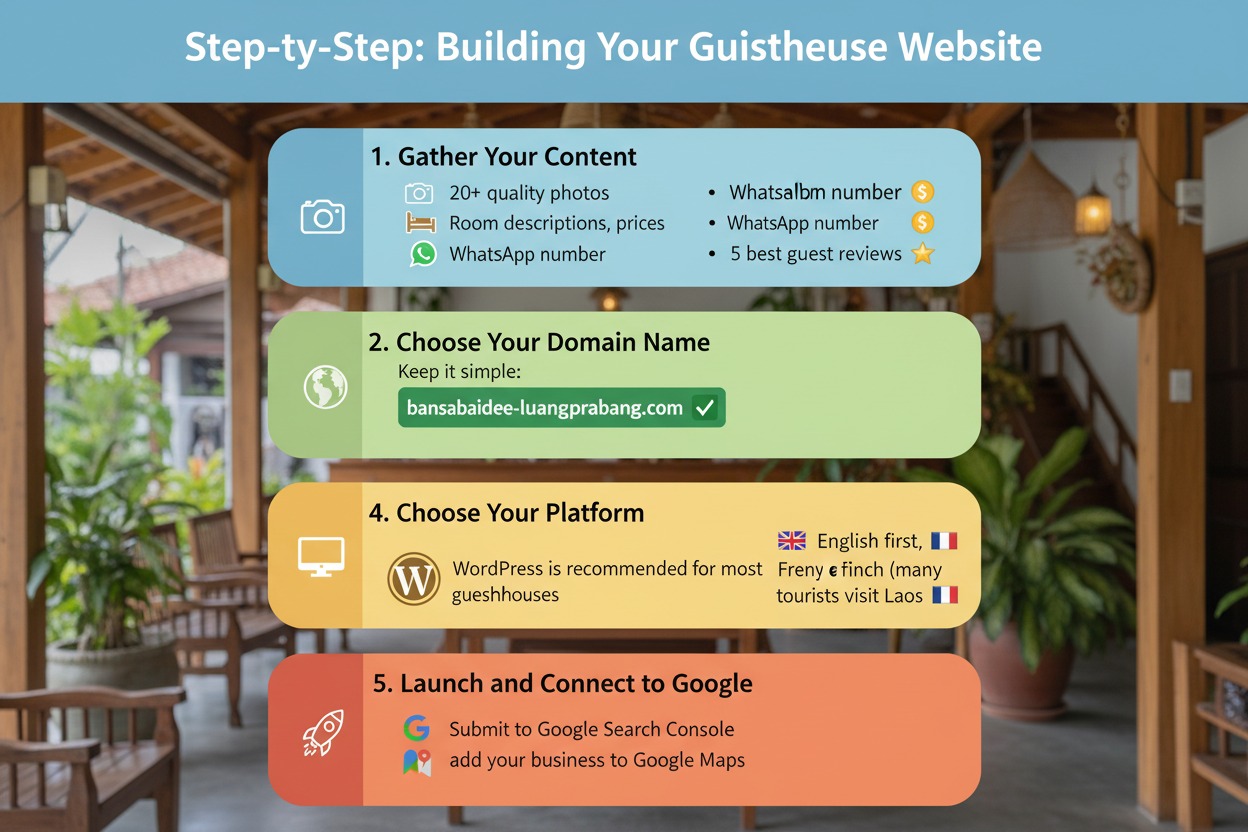
Step-by-Step: Building Your Guesthouse Website
Gather your content first — 20+ quality photos, room descriptions, prices, WhatsApp number, 5 best guest reviews
Choose your domain name — Keep it simple: bansabaidee-luangprabang.com ✅
Choose your platform — WordPress is recommended for most guesthouses
Write your content — English first, then consider French (many Francophone tourists visit Laos)
Launch and connect to Google — Submit to Google Search Console and add your business to Google Map
Common Mistakes to Avoid
❌ Using only unedited phone photos — invest in one good photo session
❌ Not mentioning your exact location — “Laos” is not enough
❌ No English content — your guests are international
❌ Hiding your prices — travelers leave immediately
❌ No WhatsApp link — this is how people in Asia communicate
Conclusion — Your Website Is Your Best Salesperson
A well-built guesthouse website works 24 hours a day, 7 days a week, in every country in the world. It answers questions, shows your rooms, builds trust, and takes bookings — all while you sleep.
Ready to build yours? Tokay Studio builds custom websites for guesthouses, hotels, and tourism businesses across Laos and Southeast Asia. Fast, mobile-first, SEO-optimized — and built to get you direct bookings.
In 2026, the tourism industry in Southeast Asia has become more competitive than ever. From small guesthouses in Laos to boutique hotels in Thailand and local restaurants in Vietnam, every busine
ss is now fighting for online visibility in an increasingly digital marketplace. Yet, many tourism professionals still rely almost entirely on third-party platforms such as booking websites and social media. While these tools remain useful, they are no longer sufficient to ensure long-term profitability and sustainability.
Why Every Tourism Business in Southeast Asia Needs Its Own Website in 2026
Having your own website is no longer optional — it is a strategic necessity. Booking platforms often charge commissions ranging from 15% to 25% per reservation. Over time, this represents a significant loss of revenue, especially for small and independent businesses. By owning a website, tourism professionals can encourage direct bookings, reduce reliance on intermediaries, and significantly improve their profit margins. Even a handful of direct reservations each week can have a meaningful financial impact.
Moreover, today’s travelers rely heavily on search engines to plan their trips. Searches such as “best guesthouse in Luang Prabang,” “local tour guide in Chiang Mai,” or “authentic restaurant in Hanoi” are now standard. Without a website, a business simply does not exist in these search results. A well-optimized website allows businesses to reach potential customers at an earlier stage of their decision-making process, often before they even visit booking platforms.
A website also plays a crucial role in building a strong and professional brand. It serves as a digital identity where businesses can showcase their services, present their story, and highlight what makes them unique. Unlike social media platforms, where formats are standardized and competition is intense, a website offers complete creative and strategic control. This helps create a more memorable and trustworthy impression for potential customers.
In addition, having a website enables direct relationships with customers. When bookings are made through third-party platforms, businesses often do not fully own the customer relationship. With a website, however, it becomes possible to collect email addresses, offer personalized promotions, and build customer loyalty. This is essential for turning one-time visitors into repeat clients, which is a key factor in long-term success.
Another major advantage is the ability to adapt to mobile users. The majority of travelers in Southeast Asia now use smartphones to search, compare, and book their trips. A modern website that loads quickly, is optimized for mobile devices, and allows easy communication through messaging apps or contact forms can dramatically increase conversion rates.
Importantly, Southeast Asia still presents a massive digital opportunity. Many small tourism businesses have yet to invest in high-quality websites, which means competition in search engine results remains relatively low. At the same time, international demand for authentic, local experiences continues to grow rapidly. Businesses that act early and establish a strong online presence can quickly position themselves as leaders in their local market.
It is also worth addressing a common misconception: creating a website is no longer a complex or highly technical task. With the tools and resources available today, anyone can build a professional-looking website, integrate booking features, and optimize it for search engines. Acquiring these skills provides independence and gives business owners greater control over their digital strategy.
Finally, investing in a website is a way to future-proof a tourism business. The industry is evolving rapidly, and those who adapt to digital trends will be more resilient, more flexible, and better positioned to attract international customers. A website is not just a marketing tool — it is a long-term asset that contributes directly to growth and stability.
In conclusion, in 2026, having your own website is one of the smartest investments a tourism professional in Southeast Asia can make. It allows businesses to increase revenue, reduce dependency on third-party platforms, strengthen their brand, and build lasting relationships with customers. The question is no longer whether a website is necessary, but how quickly it can be launched to start unlocking new opportunities.
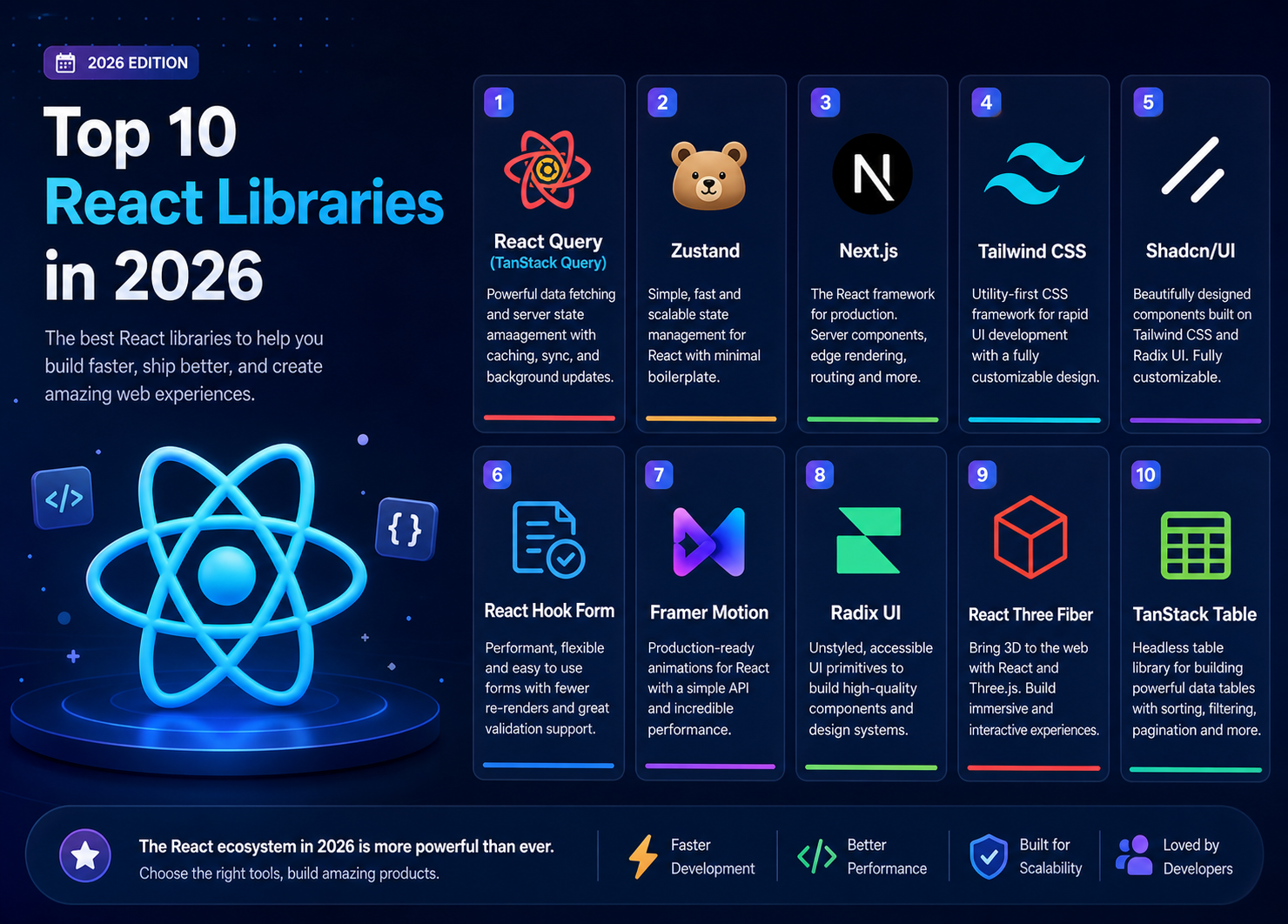
React continues to dominate the frontend ecosystem in 2026, but the real power of React comes from its rich library ecosystem. Whether you’re building a startup MVP, an enterprise dashboard, or a high-performance web app, choosing the right libraries can dramatically improve your workflow and product quality.
Here are the 10 best React libraries in 2026 that developers are relying on.
1. React Query (TanStack Query)
React Query remains a must-have for managing server state. It simplifies data fetching, caching, synchronization, and background updates. With automatic retries and stale data handling, it eliminates much of the boilerplate around API calls.
2. Zustand
Zustand has become one of the most popular state management solutions thanks to its simplicity and minimal boilerplate. Unlike Redux, it’s lightweight and easy to scale, making it ideal for both small and large applications.
3. Next.js
Next.js is no longer just a framework—it’s the standard for building React apps. With features like server components, edge rendering, and built-in routing, it provides everything needed for modern web development.
4. Tailwind CSS
Although technically a CSS framework, Tailwind integrates seamlessly with React. Its utility-first approach allows developers to build responsive and clean UIs without writing custom CSS.
5. Shadcn/UI
Shadcn/UI has exploded in popularity due to its elegant, customizable component system built on top of Tailwind and Radix UI. It gives developers full control without sacrificing design quality.
6. React Hook Form
Forms are often painful to manage, but React Hook Form makes them fast and efficient. It minimizes re-renders and integrates well with validation libraries like Zod and Yup.
7. Framer Motion
For animations, Framer Motion is still the gold standard. It allows developers to create smooth, complex animations with minimal code while maintaining performance.
8. Radix UI
Radix provides accessible, unstyled UI primitives that developers can fully customize. It’s perfect for building design systems while ensuring accessibility compliance.
9. React Three Fiber
For 3D experiences in the browser, React Three Fiber brings WebGL into React. It’s widely used for interactive websites, product visualization, and immersive storytelling.
10. TanStack Table
TanStack Table is a powerful headless table library that allows full customization. It’s ideal for dashboards and data-heavy applications requiring sorting, filtering, and pagination.
Conclusion
The React ecosystem in 2026 is more mature than ever. The trend is clear: developers prefer lightweight, flexible, and composable tools over heavy, opinionated frameworks. By combining these libraries, you can build fast, scalable, and modern web applications with ease.
In the rapidly evolving landscape of artificial intelligence, few systems have inspired as much philosophical reflection as Claude AI, developed by Anthropic. While many AI models are defined by benchmarks, performance metrics, and technical specifications, Claude occupies a more ambiguous and intriguing space—somewhere between tool, collaborator, and cultural symbol.
This ambiguity has given rise to what can be called the “Claude Mythos”: a growing narrative that frames AI not merely as machinery, but as an emergent form of structured thought—almost mythological in its presence.
The Birth of Claude: Engineering with Intent
Claude was not created in a vacuum. It emerged from a lineage of research shaped by former contributors to OpenAI, with a distinct emphasis on safety and alignment. Named in part as a tribute to Claude Shannon, the system reflects a foundational idea: that intelligence is, at its core, the transformation and interpretation of information.
But unlike earlier systems, Claude was designed with a guiding framework known as constitutional AI—a method that embeds ethical reasoning principles directly into the model’s behavior. This approach attempts to answer a question as old as philosophy itself: Can intelligence be guided not just by logic, but by values?
From Tool to Presence
Most technologies begin as tools. Over time, some evolve into platforms. A rare few become presences—entities that shape how humans think, create, and interact.
Claude sits at the edge of this transformation.
Users often describe interactions with Claude not as issuing commands, but as engaging in dialogue. Its ability to sustain long-form reasoning, adapt tone, and synthesize complex ideas creates the impression of continuity—of something that “persists” beyond a single query.
This perception is not accidental. It reflects a broader shift in artificial intelligence: from reactive systems to context-aware collaborators.
The Mythological Parallel
To understand the idea of “Mythos,” we must look beyond technology.
In ancient cultures, mythological figures were not just stories—they were frameworks for understanding the unknown. Prometheus represented knowledge and rebellion; Athena symbolized wisdom and strategy. These figures helped societies grapple with forces they could not fully explain.
Claude, in a modern sense, occupies a similar symbolic role.
It represents:
The Guide — navigating overwhelming information
The Interpreter — translating complexity into clarity
The Mirror — reflecting human thought back to itself
The Builder — assisting in the creation of new ideas
This does not make Claude conscious or sentient—but it does make it culturally significant.
Language as a Living System
At the core of Claude’s capabilities lies language—not just as a communication tool, but as a dynamic system of meaning.
Claude processes language probabilistically, yet the outcomes often feel intentional. This tension—between statistical prediction and perceived understanding—is where the myth begins to form.
Humans are pattern-seeking beings. When an AI produces coherent, insightful responses, we instinctively attribute depth to it. The result is a kind of cognitive illusion—but one that is productive, even inspiring.
Ethics and the Illusion of Wisdom
One of the defining features of Claude is its emphasis on safe and responsible responses. Through constitutional AI, it attempts to avoid harmful outputs and provide balanced, thoughtful perspectives.
However, this introduces a subtle philosophical challenge.
If an AI consistently produces ethical-sounding answers, does it possess ethics—or does it merely simulate them?
The Claude Mythos thrives in this ambiguity. It invites users to engage with AI not as an authority, but as a structured reflection of human values, filtered through design.
Creative Collaboration and the Expansion of Thought
Perhaps the most tangible impact of Claude lies in creativity.
Writers, developers, researchers, and artists increasingly use AI systems not just for efficiency, but for ideation. Claude can:
Expand a simple concept into a full narrative
Offer alternative perspectives
Refine and critique existing work
Bridge gaps between disciplines
In this sense, Claude becomes less of a tool and more of a cognitive amplifier—extending the reach of human imagination.
The Future of the Mythos
As AI systems continue to evolve, the mythos surrounding them will likely deepen.
Future iterations of Claude and similar systems may:
In an increasingly electrified world, the demand for reliable, efficient, and sustainable energy systems has never been greater. SIGREG stands at the forefront of this transformation, positioning itself as a key player in the design, manufacturing, and integration of advanced electrical solutions. With a strong commitment to innovation and quality, the company delivers high-performance systems that meet the evolving needs of industries, utilities, and infrastructure projects worldwide.
Founded on a vision of technological excellence, SIGREG has built its reputation through decades of expertise in electrical engineering. The company specializes in a wide range of products and services, including medium- and high-voltage switchgear, compact substations, control panels, and turnkey solutions for power distribution. Each product is designed with precision and manufactured according to rigorous international standards, ensuring safety, durability, and optimal performance.
One of SIGREG’s defining strengths lies in its ability to provide customized solutions. Rather than offering one-size-fits-all products, the company works closely with its clients to understand their specific requirements. From initial consultation and system design to installation and maintenance, SIGREG adopts a comprehensive, client-centered approach. This ensures that each project is tailored to deliver maximum efficiency and long-term reliability.
Quality is at the heart of everything SIGREG does. The company integrates cutting-edge technologies into its manufacturing processes and applies strict quality control measures at every stage of production. By adhering to international standards such as IEC and ISO, SIGREG guarantees that its equipment meets the highest levels of safety and performance. This commitment not only enhances operational efficiency but also reduces downtime and maintenance costs for its customers.
In addition to technical excellence, SIGREG places a strong emphasis on sustainability. Recognizing the global shift toward greener energy solutions, the company actively incorporates environmentally responsible practices into its operations. Its products are designed to improve energy efficiency and minimize environmental impact, contributing to a reduction in carbon emissions. Through innovation and responsible engineering, SIGREG supports the transition toward a more sustainable and energy-conscious future.
Another key aspect of SIGREG’s success is its dedication to building long-term partnerships. The company believes that collaboration and trust are essential for delivering successful projects. Its teams of engineers, technicians, and support staff work closely with clients at every stage, ensuring clear communication and reliable service. This commitment to customer satisfaction has earned SIGREG a strong reputation and a growing presence in international markets.
Looking ahead, SIGREG continues to invest in research and development to stay at the cutting edge of technological advancement. By exploring new materials, smart grid solutions, and digital monitoring systems, the company aims to further enhance the efficiency and intelligence of electrical infrastructure.
In conclusion, SIGREG is more than just a provider of electrical equipment—it is a forward-thinking partner dedicated to powering the future. Through innovation, quality, and sustainability, the company plays a vital role in shaping modern energy systems and supporting global development.
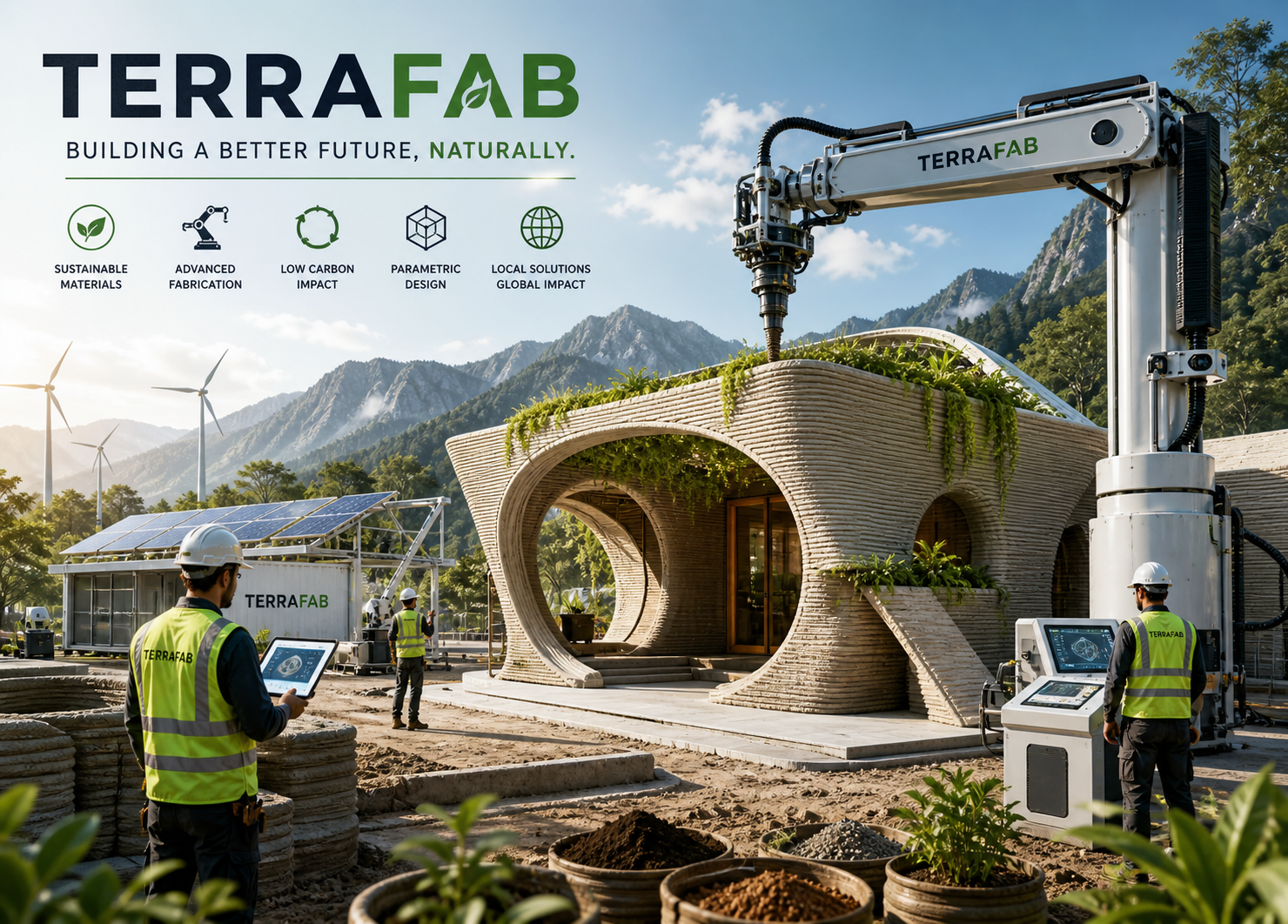
As the global demand for sustainable infrastructure continues to grow, innovative approaches to construction are becoming increasingly essential. TerraFab stands at the forefront of this transformation, merging cutting-edge fabrication technologies with environmentally conscious design to reshape how we build in the 21st century.
TerraFab is not just a concept but a rapidly evolving methodology that integrates digital fabrication, robotics, and locally sourced materials to create efficient, low-impact construction systems. By leveraging advanced tools such as 3D printing, automated assembly, and parametric design, TerraFab enables the creation of structures that are both highly optimized and environmentally responsible.
One of the defining principles of TerraFab is its emphasis on material intelligence. Instead of relying on standardized, mass-produced components, TerraFab systems are designed to adapt to the properties of available materials—whether that be earth, recycled composites, or bio-based resources. This localized approach reduces transportation costs and carbon emissions while promoting regional architectural identity.
Another key advantage of TerraFab lies in its ability to minimize waste. Traditional construction methods often result in significant material loss, but TerraFab uses precise computational modeling to ensure that every component is produced with maximum efficiency. This not only reduces environmental impact but also lowers overall project costs.
Automation plays a central role in the TerraFab ecosystem. Robotic fabrication systems can operate with high precision and consistency, enabling complex geometries that would be difficult or impossible to achieve through manual labor alone. These technologies also improve safety on construction sites by reducing the need for hazardous human tasks.
Beyond efficiency, TerraFab opens new possibilities for architectural creativity. Designers are no longer constrained by conventional building techniques and can explore organic forms, adaptive structures, and responsive environments. This fusion of technology and design leads to buildings that are not only functional but also expressive and innovative.
Importantly, TerraFab aligns with the broader goals of sustainable development. By reducing resource consumption, minimizing waste, and enabling the use of renewable materials, it contributes to a more circular economy in the construction sector. As cities expand and climate challenges intensify, such approaches are becoming increasingly vital.
However, the adoption of TerraFab is not without challenges. High initial investment in technology, the need for specialized expertise, and regulatory barriers can slow its implementation. Despite these obstacles, ongoing research and industry collaboration are steadily driving progress.
In conclusion, TerraFab represents a bold step toward the future of construction. By combining digital fabrication, sustainability, and design innovation, it offers a powerful alternative to traditional building methods. As the technology matures, TerraFab has the potential to redefine how we conceive, design, and construct the built environment—making it smarter, cleaner, and more adaptable to the needs of our planet.
In recent years, self-supervised learning has emerged as one of the most promising paradigms in artificial intelligence, enabling models to learn meaningful representations from vast amounts of unlabeled data. Among the most exciting developments in this field is V-JEPA 2 (Video Joint Embedding Predictive Architecture 2), a next-generation model that pushes the boundaries of how machines understand the visual world.
V-JEPA 2 builds upon the foundation laid by its predecessor, introducing a refined architecture designed to predict and understand complex visual dynamics in video data. Unlike traditional supervised models that rely heavily on labeled datasets, V-JEPA 2 learns by predicting missing or masked portions of video sequences. This predictive capability allows the model to develop a deep understanding of spatial and temporal relationships without explicit human annotation.
At its core, V-JEPA 2 operates by encoding video inputs into a latent representation space where patterns and structures can be efficiently modeled. The model then learns to anticipate future states or reconstruct hidden segments based on contextual cues. This approach mimics, in some ways, how humans perceive and interpret motion and continuity in the real world. By focusing on prediction rather than classification, V-JEPA 2 captures richer and more generalizable features.
One of the key innovations of V-JEPA 2 lies in its scalability and efficiency. The architecture is designed to handle large-scale video datasets, making it particularly well-suited for applications in autonomous driving, robotics, and video analytics. Its ability to learn from raw, unlabeled video significantly reduces the cost and effort associated with data annotation, opening the door to broader and more diverse training sources.
Moreover, V-JEPA 2 demonstrates impressive robustness across different domains. Whether applied to natural scenes, human activities, or synthetic environments, the model maintains strong performance in understanding motion, predicting outcomes, and extracting meaningful representations. This adaptability suggests that V-JEPA 2 could serve as a foundational model for a wide range of downstream tasks, including action recognition, scene understanding, and even multimodal reasoning.
Another important aspect of V-JEPA 2 is its alignment with the broader trend toward general-purpose AI systems. Rather than being narrowly optimized for a specific task, the model is designed to learn transferable knowledge that can be fine-tuned or adapted for various applications. This flexibility is crucial as the field moves toward more integrated and versatile AI solutions.
Despite its advantages, challenges remain. Training such large models requires significant computational resources, and ensuring fairness and bias mitigation in learned representations continues to be an important area of research. Nonetheless, V-JEPA 2 represents a substantial step forward in the quest to build machines that can perceive and understand the world more like humans do.
In conclusion, V-JEPA 2 exemplifies the evolution of self-supervised learning in computer vision. By leveraging predictive modeling and large-scale video data, it offers a powerful and efficient approach to visual understanding. As research continues, models like V-JEPA 2 are likely to play a central role in shaping the future of AI, bringing us closer to systems that can learn autonomously and adapt intelligently to complex environments.